
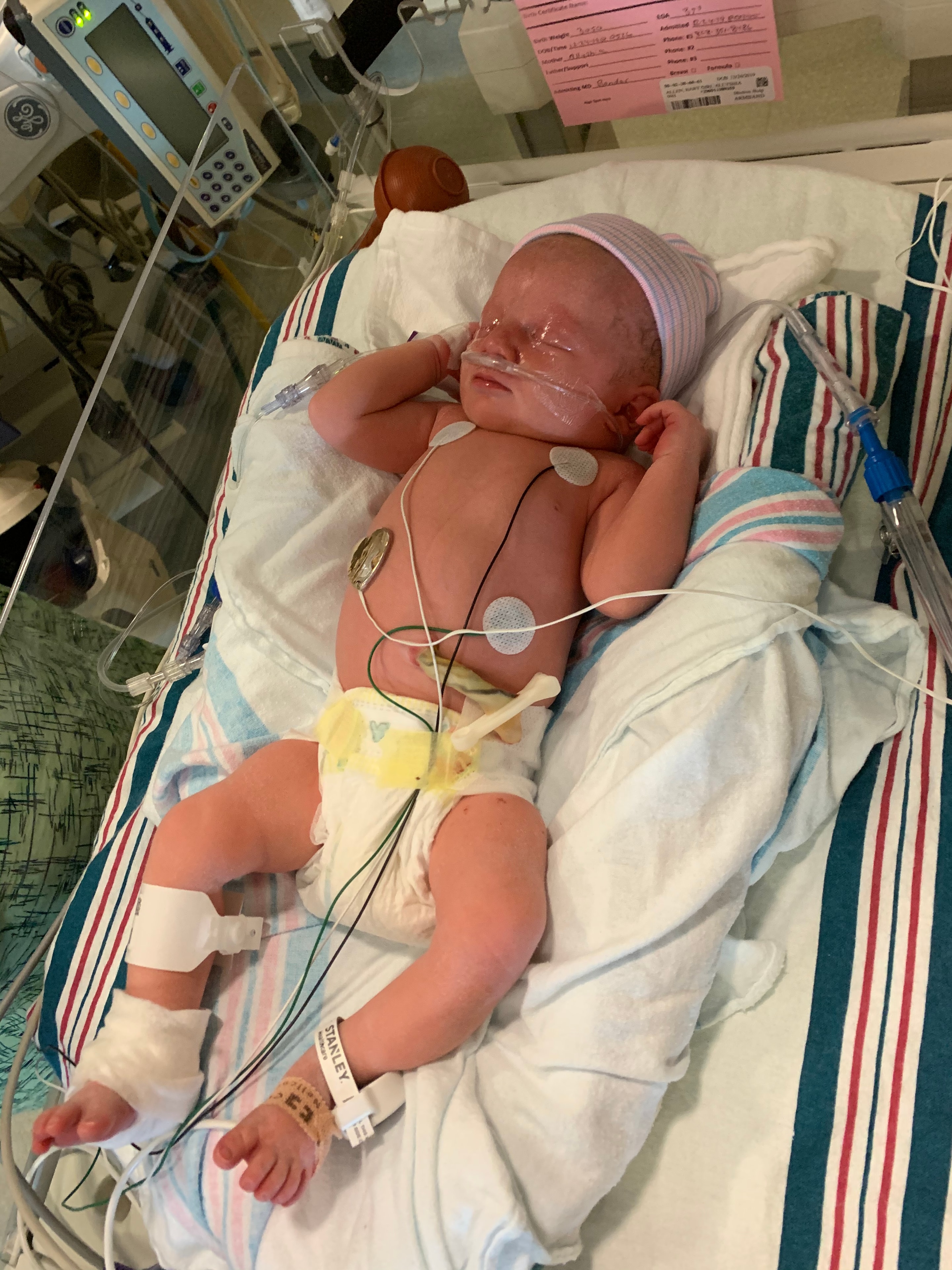
They arrive before the world is ready for them — and before they are quite ready for the world.
A premature baby is not simply a smaller version of a full-term newborn. Their nervous system, lungs, digestive tract, and brain are still actively developing outside the womb — in an environment that, no matter how skilled the NICU team, was never designed for them. Understanding this distinction is the foundation of everything: how you hold them, how you feed them, how you help them sleep, and how you eventually bring them home.
What Makes a Baby "Premature"
A full-term pregnancy is 40 weeks. Babies born before 37 weeks are considered premature. Those born before 32 weeks are very preterm, and before 28 weeks are extremely preterm. Each week in the womb matters enormously — brain development, lung maturation, the ability to regulate body temperature, and the suck-swallow-breathe reflex all develop in those final weeks. A baby born at 34 weeks is not "almost there" — they are missing critical developmental time that the outside world cannot fully replicate.
Common NICU Complications
Premature babies face a range of medical challenges that full-term infants rarely encounter. Respiratory distress syndrome occurs when the lungs haven't produced enough surfactant to stay open between breaths. Apnea of prematurity — pauses in breathing — is common and monitored closely. Temperature dysregulation means their bodies cannot maintain warmth without external support. Feeding difficulties arise because the suck-swallow-breathe coordination isn't yet automatic. Jaundice, anemia, and infections are more frequent. And for the most premature babies, intraventricular hemorrhage — bleeding in the brain — is a serious risk. These are not minor hurdles. They are the reason NICU families live in a state of constant vigilance.
"Darkness, quiet, and gentle containment are not luxuries. They are medicine."
Sleep in the NICU: A Different World
Premature babies spend most of their time in a sleep-like state — but it is not the restorative sleep a full-term baby experiences. Their sleep cycles are shorter, less organized, and more easily disrupted. The NICU environment — bright lights, alarms, frequent handling for medical care — is the opposite of what a developing nervous system needs. Research consistently shows that minimizing unnecessary stimulation, clustering care activities together, and protecting sleep windows improves outcomes for premature infants. Darkness, quiet, and gentle containment are not luxuries. They are medicine.
How Premature Babies Differ from Full-Term Infants
When you bring a premature baby home, it is essential to use their corrected age — not their birth age — for all developmental expectations. A baby born 8 weeks early who is now 4 months old has a corrected age of 2 months. Their sleep patterns, feeding needs, wake windows, and developmental milestones should all be measured from their due date, not their birth date. Expecting a premature baby to sleep like a full-term peer of the same birth age is one of the most common and painful mistakes exhausted parents make. It sets everyone up for frustration and can lead to interventions the baby's nervous system simply isn't ready for.
A note on corrected age
Always calculate your premature baby's milestones and sleep expectations from their due date, not their birth date. A baby born 8 weeks early who is 4 months old has a corrected age of 2 months — and should be treated accordingly.
The Importance of Gentle Handling
Premature babies have a lower threshold for sensory overload. What feels like a normal interaction to an adult — a firm touch, a sudden sound, a bright light — can trigger a stress response in a preemie that disrupts their fragile physiological stability. Gentle, slow, contained touch is not just kind. It is clinically important. Kangaroo care — skin-to-skin contact with a parent — has been shown to stabilize heart rate, improve oxygen saturation, support weight gain, and regulate sleep. The nervous system of a premature baby is still learning to exist in the world. Every gentle interaction teaches it that the world is safe.
Sleep Training and Premature Babies: Proceed with Care
Sleep training is not appropriate for premature babies on the same timeline as full-term infants. Most sleep consultants — myself included — do not recommend any formal sleep training until a baby has reached at least 4 to 6 months corrected age, and only then if they are medically stable, gaining weight appropriately, and feeding well. The pressure parents feel to "fix" their premature baby's sleep is real and understandable. But the answer is almost never a structured sleep training method. It is support, education, realistic expectations, and a plan that honors where this particular baby actually is — not where a chart says they should be.
What NICU Families Actually Need
NICU families need someone to tell them the truth: this is hard, it will take longer, and that is not a failure. They need permission to grieve the birth experience they didn't get. They need practical guidance on corrected age, safe sleep environments, feeding cues, and what normal premature infant sleep actually looks like. And they need someone who will not apply a one-size-fits-all approach to a baby who has already defied the standard timeline once.
If you are navigating life after the NICU, I see you. The road is longer and less predictable — but your baby is here, and that is everything. Reach out whenever you are ready.

Sam
Certified Sleep Trainer · Certified Newborn Care Specialist · Registered Psychological Associate · PsyD Clinical Psychology (Candidate). Based in San Diego, available nationwide.